Now I Lay Me Down To Sleep

It’s 11:00 on a school night and Tyson is still awake.

It’s going to be one of those nights when sleep doesn’t come easy.

I hate those nights.

I absolutely love my sleep and I am quite crusty (that my word for contrary) without it. I don’t need much, a good 6 hours works for me.

I am only actually talking about sleep because right now we are going through a little (and hopefully short lived) sleep regression.

When Tyson was little, sleep was one of our biggest issues.

Mark had to hold him tightly in his arms and rock him to sleep, every single night. It would take a very, very long time for him to settle.

And then he had to make it upstairs and put him down in his crib/bed without him waking.

And after all that, he would often wake at 1 or 2 in the morning and be awake for hours.

It was awful.

This was the norm 4-5 nights per week.

It was like having a newborn except he wasn’t a newborn.

I was severely sleep deprived. Mark was severely sleep deprived.

Tyson however, didn’t appear sleep deprived. In fact, he was a bundle of energy.

During this time, Tyson was also into the habit of what I called ‘stripping beds’. He would go into our room and take all the blankets off the bed and get between the fitted sheet and the mattress.

Tyson under the fitted sheet.

I remember one night going to bed really late after staying up to watch a TV show (bad idea) and finding my bed naked. I could have cried.

Tired, needing sleep and a personality that requires a fully made bed does not work.

We tried everything to get him to sleep.

He had a very specific bedtime routine, no electronics after 7, consistent waking time each morning. Nothing helped.

Nothing helped until we found melatonin.

For years I was hesitant to give it to Tyson each time a professional suggested it and many suggested it.

It took driving home from work after getting two hours of sleep the night before (yes, two hours of sleep) and completely cutting off two separate vehicles to finally admit something had to change.

If I felt like crap on a daily basis, then surely Tyson must have felt the same.

Introducing melatonin give us all our sleep back.
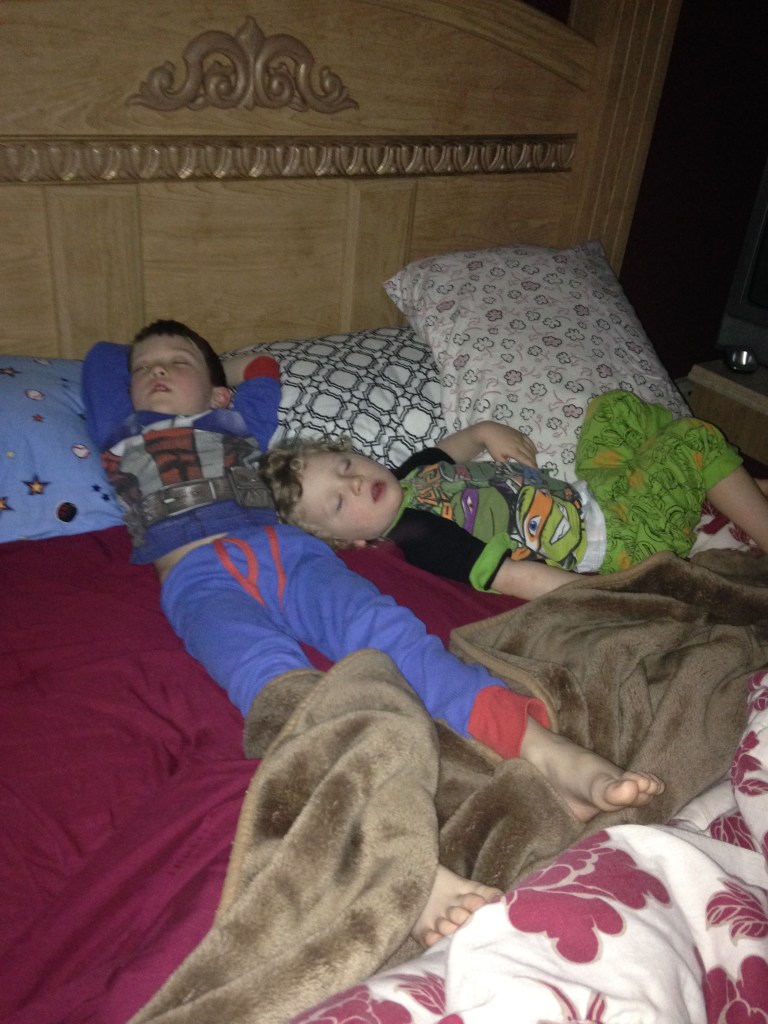
We still have sleep issues but it is minor compared to the years from ages one to five.

Anything that alters Tyson’s routine results in a sleep setback.

We are now on ‘it gets dark earlier’ change in routine.

Soon it will be the daylight savings time change.

Then after that comes Christmas, where the lack of routine plus the stimulation will cause sleep change.

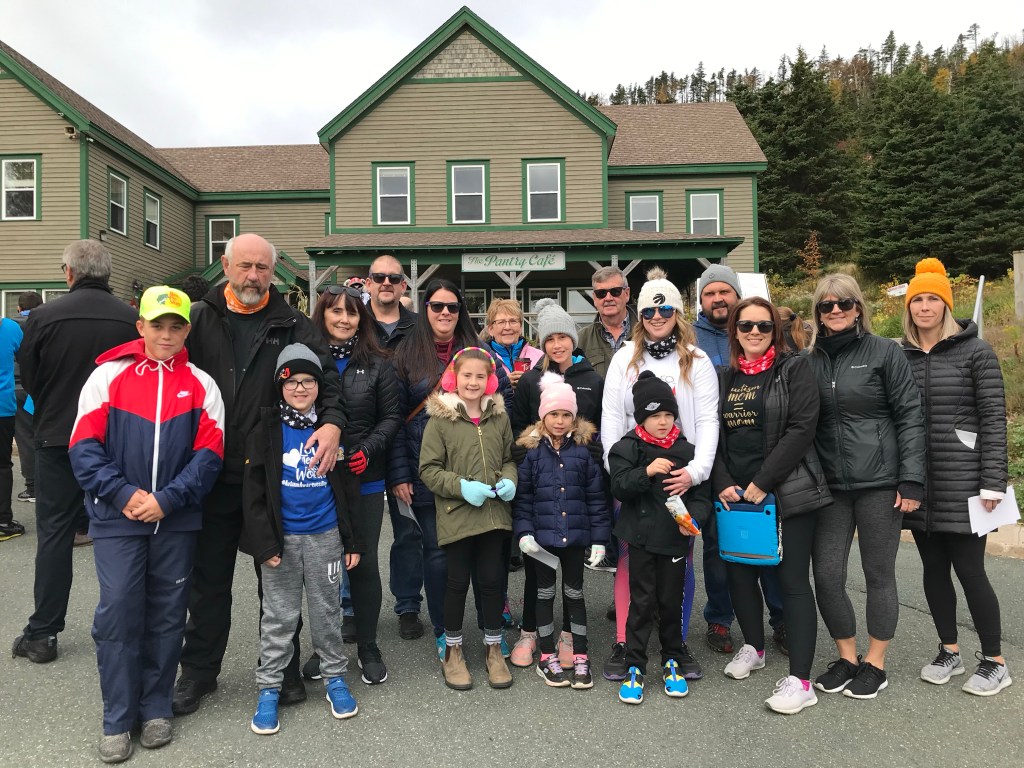
And in between all of that, is the going to St. Bride’s with Nan and Pop for the weekend change in routine.

This is why we try as much as possible to stick to a consistent wake time every morning, weekday or weekend.

It sucks to wake a quiet, sleeping child on the weekend but it is necessary if we want him to go to bed that night.

Tyson will also struggle to fall sleep the night before an exciting event – first day of school, birthday, anything out of the ordinary.

First day of school this year he went to sleep on time but was up at 4 am for the day.

According to a recent study (Souders et al; 2017) 60-86% of children with ASD have sleep difficulties.

That’s a lot of tired moms and dads.

Our body naturally produces melatonin in a circadian pattern with increased levels at night and relatively low levels during the day.

Several studies have also found considerably lower levels of melatonin in autistic children.

If being an autism parent is not hard enough … now we need to do it on broken, irregular sleep.

Now don’t get me wrong, melatonin is not magic (even though some nights it feels like it). My friend calls is liquid gold.

For Tyson, it calms his body enough so he can fall asleep.
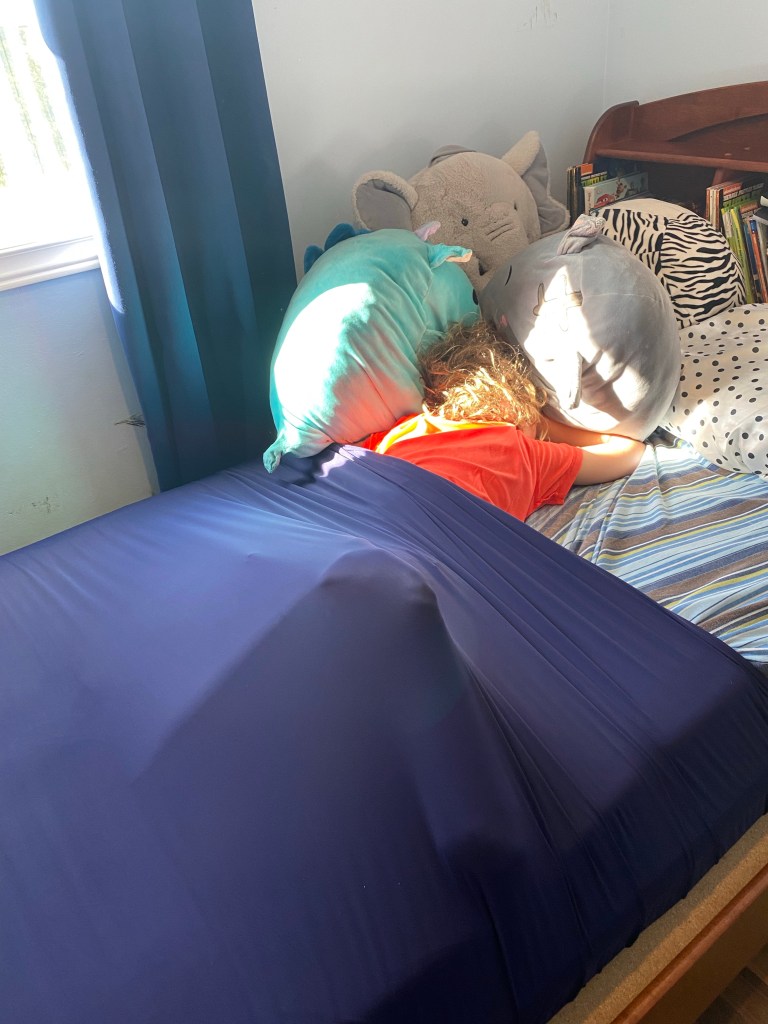
Getting ready to wake Tyson for school.

In order for melatonin to work for Tyson all the other factors need to be in place which consists of no electronics directly before bed, black out curtains, melatonin given at the same time each night, consistent wake time in the morning and more recently a compression sheet on his bed.

It’s all part of the process.

Sometimes we are not great with taking away the electronics on time and then wonder why Tyson is having trouble falling asleep.

All these steps are necessary for a good nights sleep.

For me, part of the reason why I struggled in deciding to give Tyson melatonin was because it almost felt like I was failing.

Failing as a parent.

Why could I not get my child to sleep?

Why could I not just deal with the lack of sleep, isn’t it just a part of parenthood?

For parents out there that are in a similar situation, this is my message to you – let go of the guilt.

Sleep is not a luxury but a basic biological need, just like food and water.

Our bodies need sleep and during sleep important biological processes occur such as body repair (Google it, it’s true).

Moms often put the well being of everyone before themselves but in order to be our best, we need to make sure our basic biological needs are met.

Melatonin is not the answer for every child, but finding a solution to your child’s sleep issues is necessary for both their health and well-being and your own.

And it’s okay to need help from others to make that happen.

Disclaimer – I’m not a medical professional therefore parents should seek medical advice before introducing any type of supplement.
Gratitude

I was recently reading a friend’s blog about her gratitude practice and it reminded me of when I use to keep a gratitude journal.

It has been years since I actually wrote in a journal however in my head, I always have lists of things I am grateful for in my life.

Sometimes it is as simple as getting a green light and not being late for somewhere I need to be.

Yesterday I was grateful that I managed to bring Tyson to check the mail and take the puppy for a walk at the same time and it was not a disaster. We have been working on this and up until yesterday, it was not going so well.

I am also known to be grateful for a bite of chocolate and a diet Pepsi when the house falls silent at the end of the night.

And of course there are the big things on the list like my family and extended family.

My family and Mark’s family have always been so supportive of us and of Tyson’s needs, that I never really thought of others not having that.

However, there are some families that do not have that support, that unconditional love, acceptance and understanding that autism families need.

I realize how lucky we are that they are always just a phone call away.

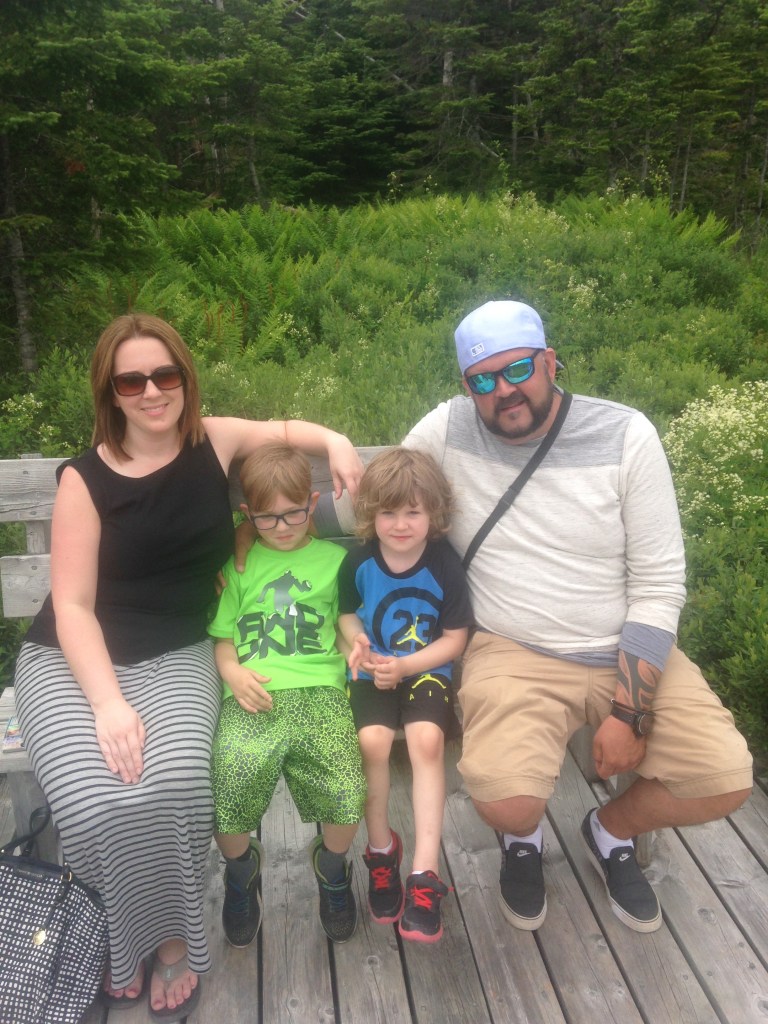
Just a few of our family supporters.

But there are two areas of my life that I haven’t talked much about but I am eternally grateful for.

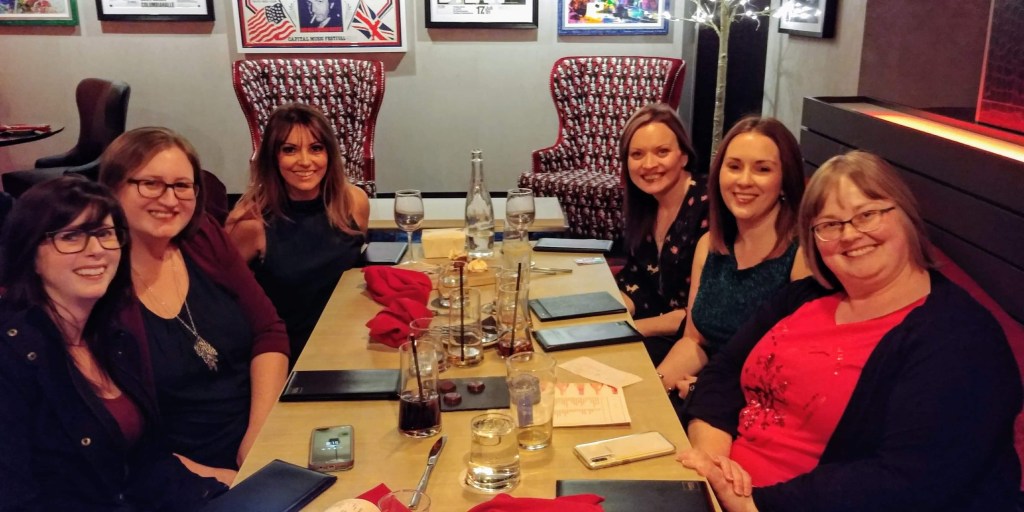
The first being my autism moms or AUsome moms, as we like to call ourselves.

PIECES Parent Support Group – Where it all began

They are moms, just like me, raising kiddos on the spectrum.

They have the same struggles as we do and they celebrate the same nontraditional joys like getting your child to wear socks, trying a new food or going to a restaurant.

These are the people I turn too when I have a bad day and equally as important, they are the ones I call when we have reason to celebrate.

They are always there with a listening ear, an empathetic word or affirmation that ‘sometimes life sucks’.

These girls are my people. They get me, they get us.

And the best part of sharing a similar journey is that their successes are my successes.

It is so uplifting when having a hard day to get a message from one of the moms that her little girl tried a new food or so and so said a new word.

I call it my “double joy”. I’m happy for the mom and the kiddo that had success but it also gives me hope that one day we will be celebrating a similar accomplishment.

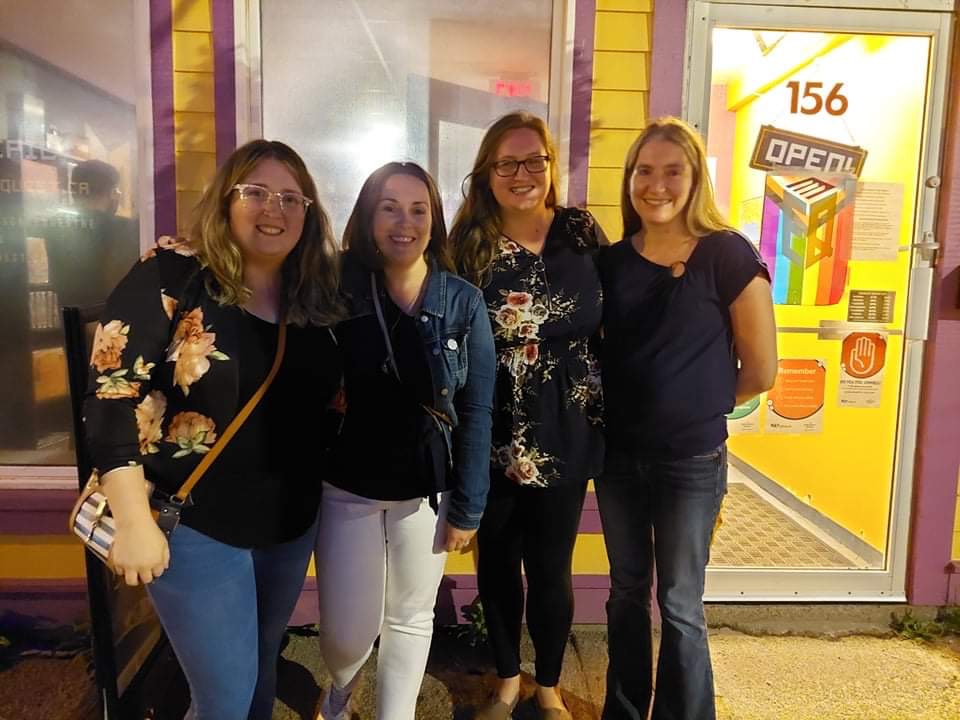
Escaping the Fairies at Escape Quest

And I love whenever one of us is having an issue, because let’s be honest, there’s never a dull moment, the first thing we do is tell each other about it.

The support these ladies provide to each other is just simply amazing.

For the most part, these friendships started through a parent led autism support group. For the past four years, me and a couple of other moms have been facilitating a parent support group through the Autism Society for families with young children on the spectrum.

As we continued to meet as a group, our friendship grew and now I am blessed with having these amazing women in my life.

Isn’t it funny how something that was started to help others, is now bringing so much joy to my life?

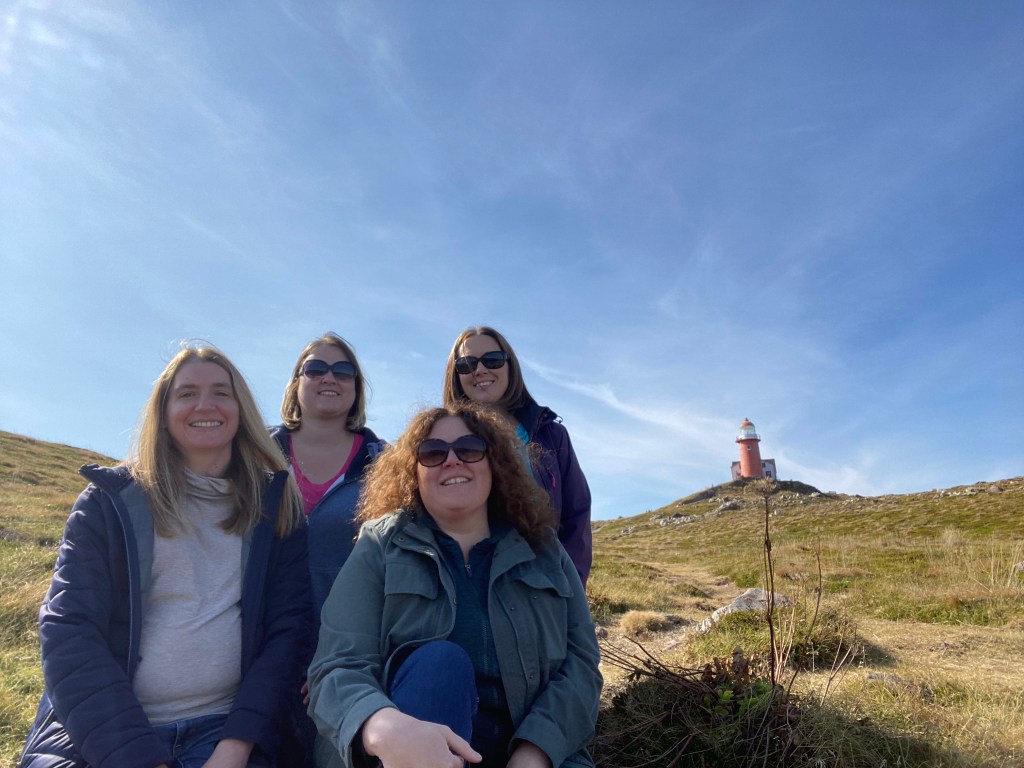
Picnic at Ferryland

Which brings me to my next reason to be grateful, my work life.

I think one of the most daunting tasks since Tyson’s diagnosis has been trying to maintain a work life balance.

For many working moms that I have spoken to, the stress of trying to juggle appointments, therapies and calls from school to pick up your child, is often too much while working full time.

Many moms have had to leave their place of employment because the actual time demands of ABA therapy does not allow them to hold a 9-5 job.

Lucky for me, I have been blessed with an amazing employer and co-workers.  

My boss’s philosophy is family comes first. And he truly means it.

There are many days in the run of the month when I have to send a message letting my employer know I will be late today or have to leave early because I am needed at home.

I realize not everyone is so lucky.

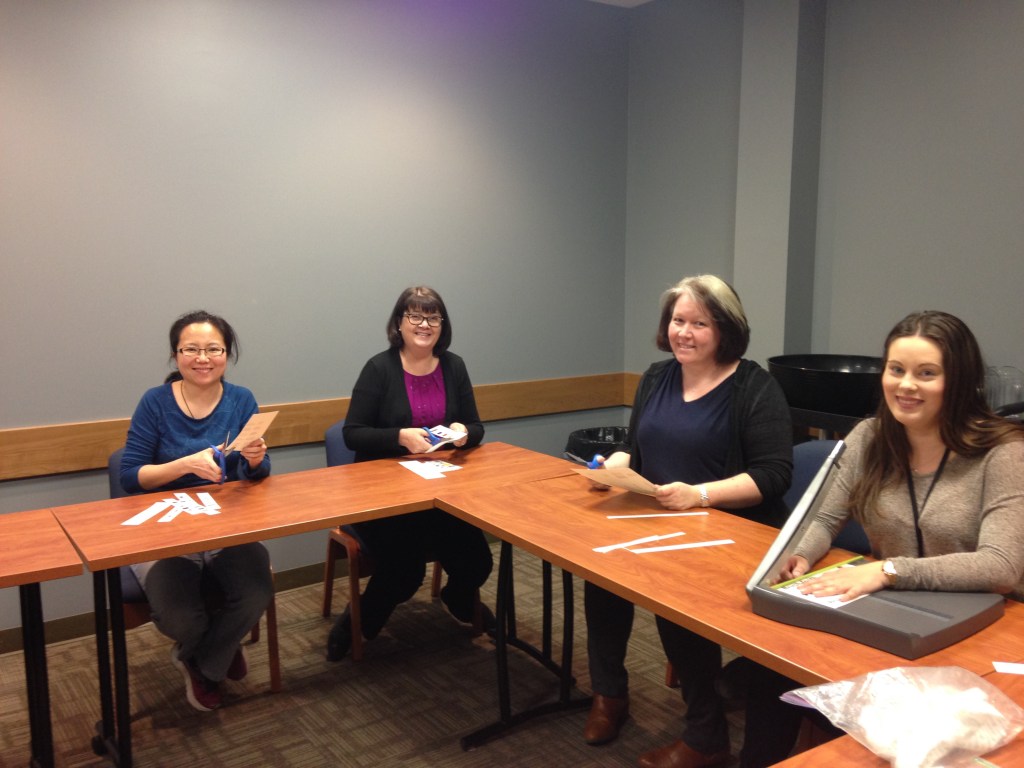
On top of a wonderful, caring boss, I have these amazing woman that I am so lucky to call my co-workers.

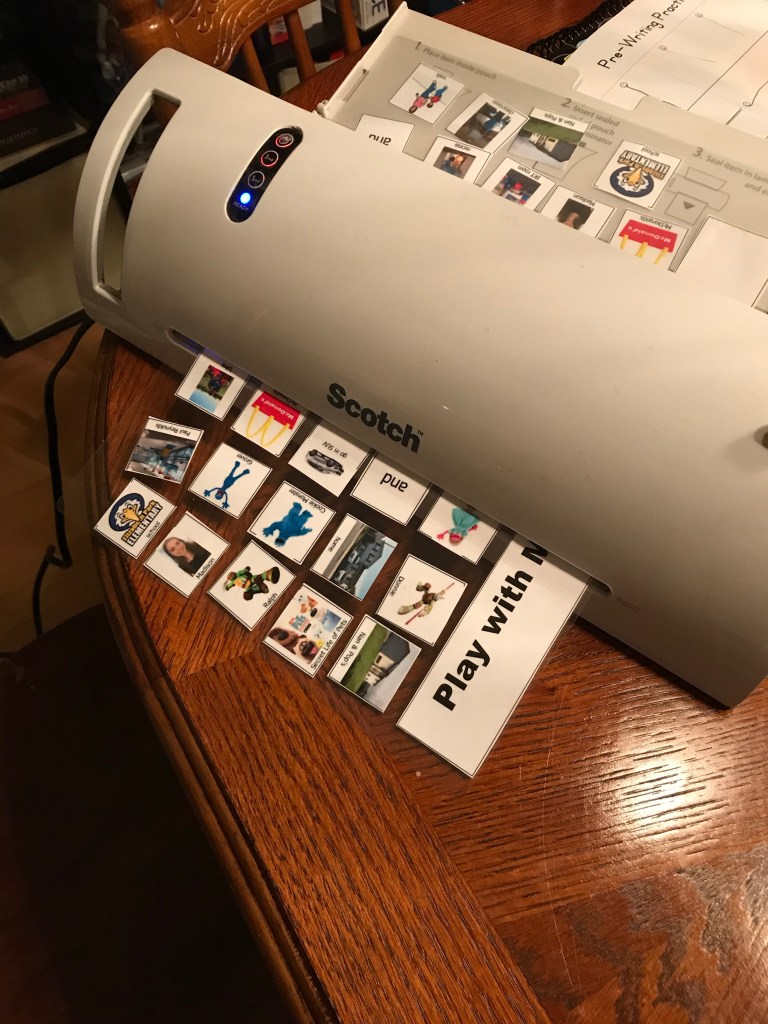
What else is there to do on a lunch break but cut, laminate, and apply Velcro for Tyson’s visuals?

Many people in their situation might feel resentment towards me, when I am often coming in late or having to leave early for an appointment.

Not these ladies. In fact, they will often remind me of my biweekly home visit with Tyson’s senior therapist and tell me I better get going or I’m going to be late.

They will take over my lab work if something comes up at home that needs my attention.

But the most wonderful part is that they truly care about me and my family.

They will listen to my many stories about what is going on with us now. They’re always checking in on us, asking about how Tyson is making out in school or what was the outcome of an appointment or therapy session.

They know as much about Tyson as I do (lol).

I feel blessed to be surrounded by such caring and compassionate people.

So, with thanksgiving weekend upon on, I would love to hear what are you grateful for? Please share your thoughts in the comments below.

Just Say Hi!

As we head into a new school year, I wanted to reshare something I wrote last year at the beginning of the school year.

It has been a very common experience for us, as an autism family and I’m sure for many other families that are a little different like ours.

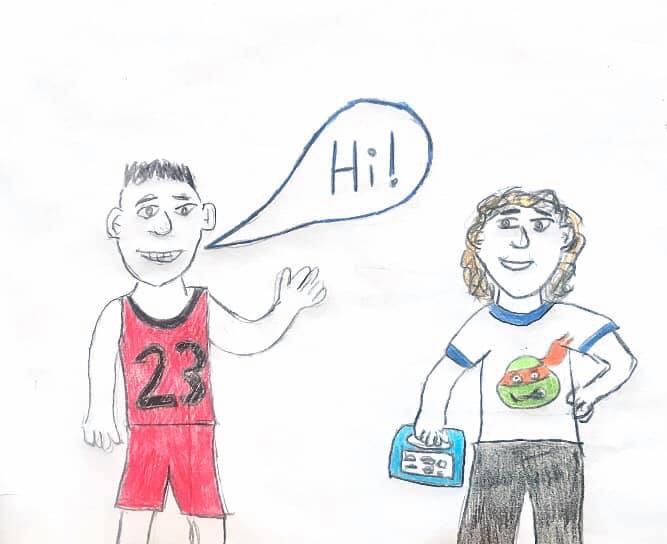
When Tyson and I are walking into the school, and we encounter our peers, we often see that you do not know how to engage with us. Here is what these encounters look like for us:

Parent: Do you know that little boy?

Child: Yes, that’s Tyson.

Parent: Say hi!

Child: He has Autism. He doesn’t talk.

Parent: *deer caught in headlights*

Most are probably hoping that I didn’t hear.

But I already know Tyson has Autism! No surprise there!

So what is the right thing to say, dear parents caught in Autism headlights?

“Hi.”

For some reason because Tyson is nonverbal, people also think he can not hear or understand.

I get that this can be hard or confusing for kids. They say hi, but he doesn’t say hi back.

So, before we all get back to the school drop-offs, and the trips to the playground after supper to soak up the last minutes of summer, can I make a suggestion? Let’s have a conversation with our children or students, explaining that just because someone doesn’t speak, that doesn’t mean they cannot hear or understand.

Just last week, we were at the playground and Tyson went running toward the swings. One little girl told her friends he has Autism, but she did not acknowledge him or speak to him. This has happened so many times to us when out in the community.

We are lucky that we have encountered very few people who are mean to Tyson.

But we have also encountered very few who are inclusive.

A simple “Hi” can mean so much.

If you want to work toward better inclusion, if you want to help us feel less alone, if you want Tyson to be treated just like any other kid, “Hi” is a great place to start!

The attitude of inclusion is contagious, and I know you can help it catch on!

Please share!

#justsayhi

When It’s Not Autism


I don’t know about you, parents, but do you find now that your child has an autism diagnosis, whatever medical issue arises is attributed to autism?

Tyson has had acid reflux since about 8 weeks old. It is chronic and persistent.

When he was younger, he was medicated for it many times but it never went away.

My family doctor treated his symptoms but eventually our developmental paediatrician recommended we see a specialist.

“It’s probably related to autism.”

“Kids with development issues sometimes ruminate.” (Rumination is the act of voluntary regurgitating food and is known to occur in individuals with developmental delay.)

Each time Tyson was seen by the specialist, this is what he would say.

However, I didn’t see it quite this way.

What if it was not “autism”?

What if it’s chronic acid reflux?

What if, this was truly causing him discomfort and pain daily?

He can’t tell me he is in discomfort, so how do I know for sure?

So the last time I took Tyson to see the specialist, I said, ‘are you sure?’.

Are you sure it’s rumination and not reflux?

Because we would not let a neurotypical child suffer like this.

So …. he agreed to do a scope.

I’m not sure if he agrees with me or if he is just tired of listening to me, either way we need to get to the bottom of this.

I also thought Tyson needed prescription glasses.

He squints, a lot!

“It’s probably autism”, I was told.

“Visual stim”, I was told.

But it may not be.

How can a child learn in school if he can not see properly?

So I took him to an optometrist.

Before going, I researched which optometrist was autism friendly.

Yes, we parents of autistic children need to check these things.

Not everyone has the skills necessary to help our kids. (Not everyone treats our kids with respect and dignity either.)

We found a lovely optometrist who is excellent with working with children on the spectrum.

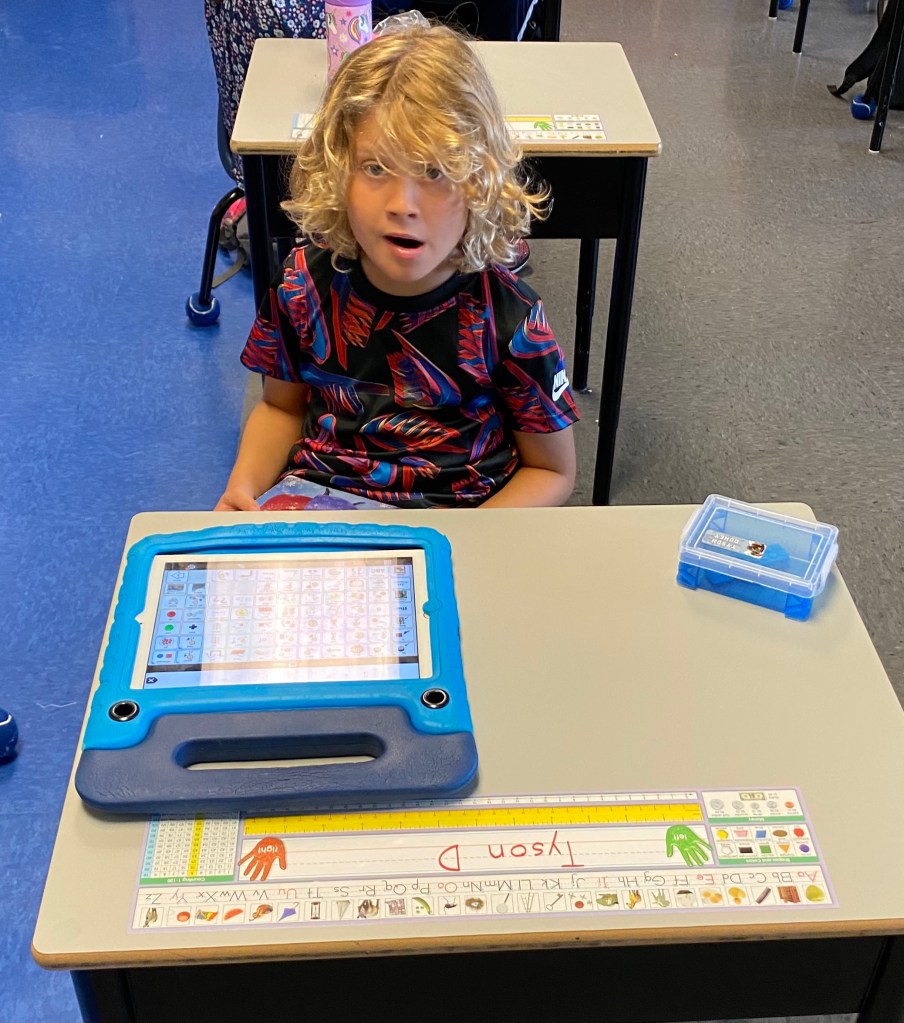
I suggested we start with a visual acuity test, as Tyson knows his letters and can use his communication iPad to identify them.

Tyson could identify the beginning letters but as the letters got smaller, he got it wrong or stopped answering.

The optometrist suggested we dilate his pupils in order to know for sure if he had a vision problem.

So, as difficult as that was, we did it.

The optometrist then shune a light in his eye while holding a special lens up to his face. Depending on how the light reflects back, indicates if a visual issue is present.

“No prescription needed.”

Honestly, this optometrist was wonderful. He was patient, caring and treated Tyson with respect.

But when I questioned him on why he got the ‘smaller’ letters wrong and he as often squinting when watching TV, he blamed autism.

“Maybe he is having trouble focusing on the letters. Maybe he likes how it visually looks when squinting.”

However, I was not convinced.

The school had mentioned that Tyson would not copy his agenda from the board but if written on a piece of paper and put on his desk, he would type it into his chromebook. They thought he should get his eyes checked.

At home, Tyson was always stealing Lincoln’s glasses and wearing them.

One evening he even requested on his communication iPad “Lincoln bath glasses”. He knew when Lincoln got a shower, the glasses were unattended and he could get his hands on them.

The real sign however, was one evening when he screamed at a Sobeys reusable bag.

You see, Tyson does not like to see his schoolbag when he gets home from school. He goes to great lengths to hide in, if it is left out.

It is common for him to come running down the stairs, screaming, grab the schoolbag and shove it in the drawer. Same with the lunch bag and Lincoln’s schoolbag. I guess he realizes if Lincoln is going to school, so is he.

However, from the top of the stairs he was mistaking a reusable Sobeys bag for his schoolbag. He got to almost the bottom step before he realized exactly what it was.

So ….. once again, back to our amazing developmental paediatrician who listened to my concerns and referred us to the Janeway for a second opinion.

I have to stop right here and just tell you, how none of these things are easy.

I don’t want second opinions.

I don’t want to be on the list for new departments at the Janeway.

Going anywhere can be somewhat challenging but going to a place where Tyson is nervous and scared, is very, very difficult.

It starts with the waiting room.

We waited for about 30 minutes before being called in.

During this time, Tyson did watch YouTube but also ran around the room and tried to escape upward of ten times.

When it was finally our turn, the optometrist tried the visual acuity test again. As before, he got the larger letters correct and the smaller letters wrong. She went back to the bigger letters but then he got those wrong too.

She said the only way to be sure if there was a vision problem was to dilute his pupils. She asked if we had any upcoming surgeries as they could coordinate and do it then, which was a great suggestion but didn’t apply to us.

She obviously knew how difficult this might be and wondered if there was an easier route.
So we did the drops again. This time Mark wasn’t with me and I didn’t anticipate just how hard it would be to hold him still in order to get the drops in.

I’m not sure if you can appreciate how unpleasant this all is, by just reading it.
It is draining – physically and emotionally.

After it’s done, I feel like someone sucked the life out of me.

I also wonder what this is doing to Tyson.

And I know, our next visit will be just that much harder, as he will remember us holding him down to put the drops in his eyes.

So … drops are in and we are back to the waiting room to wait until they take effect.

After at least another 45 minutes, we were now ready to see the ophthalmologist.

I can’t say enough good things about the ophthalmologist Tyson saw. She was patient, persistent, and very thorough.

This part of the process took about an hour.

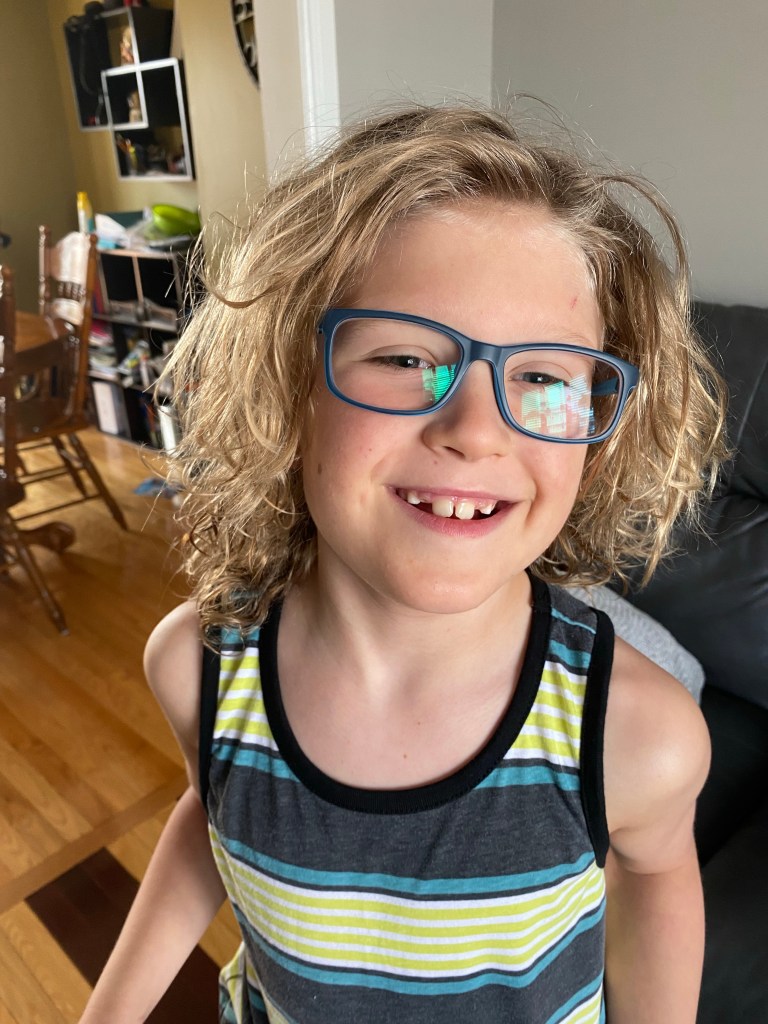
Not only does Tyson need glasses, but his prescription is significant and very close to Lincoln’s prescription.

And by the strength of the prescription, and the other signs that were present, I am guessing he has needed them for quite some time.

Relief.

Finally.

Then the reality of Tyson and glasses sinks in.

Will he wear them?

How many pairs will he break a year?

Are we even going to be able to find them on a daily basis? He has a tendency to flick and drop things. We are constantly looking for something. Constantly!

Once again, before taking him to pick out glasses, I do my homework.

I found out which vision centres parents have had good experiences with their autistic children.

I called one clinic and explained our situation. She suggested we come in for the first appointment of the morning and she didn’t book anyone else in during that time slot.

They were simply amazing.

One employee picked out a bunch of glasses and she gave us a separate room for Tyson to try them on. She let him use her computer as a distraction.

Another employee came in and suggested a pair of glasses that are flexible and suitable for kids who are a little rough.

They locked the front door so Tyson was safe and stationed another employee at the door, in case someone needed to come in.

The only thing they had left to do was check his pupillary distance.

Once again, the employee was wonderful. She said to me, “you know him best, I’ll follow your lead”.

Instead of measuring with the typical device, she said she could just mark on the lens itself. She demonstrated to Tyson how she was going to do this with another one of the staff members’ glasses.

Poor kiddo, he was so scared. He closed his eyes and his entire body was tense.

And now Tyson has glasses.

If you have managed to read all the way to the end of this post, I applaud you.

I think I might have gotten a little off topic from the original post but I have some much I want to share with you. (And I thought many people may be curious how you test a nonverbal child for glasses.)

Parents, if you think something is not right, be persistent.

Find a professional who will listen.

Because it’s not always autism.

What’s on the Menu?

Chicken nuggets

Goldfish (original)

McDonald’s fries

Chicken nuggets

KFC popcorn chicken

Mary Brown’s taters

Brookside Blueberry and açai dark chocolate

Home style restaurant fries (Swiss Chalet, Ziggy’s, Ches’s)

Cheesies

Ketchup (does ketchup count as a food!?!?)

Did I mention chicken nuggets?

Jane’s chicken nuggets, to be specific.

That’s the list.

The complete list of the foods Tyson will eat.

Just read it again.

Really sad, isn’t it?

It wasn’t always like this.

As a toddler, Tyson was a great little eater.

He loved apples, kiwis, plums, carrots, ice cream, hamburgers, yogurt, cookies, spaghetti, Shepard’s pie, pizza, bread, cereal, peanut butter.

He loved food.

As time passes, it’s hard to remember all the foods he used to eat.

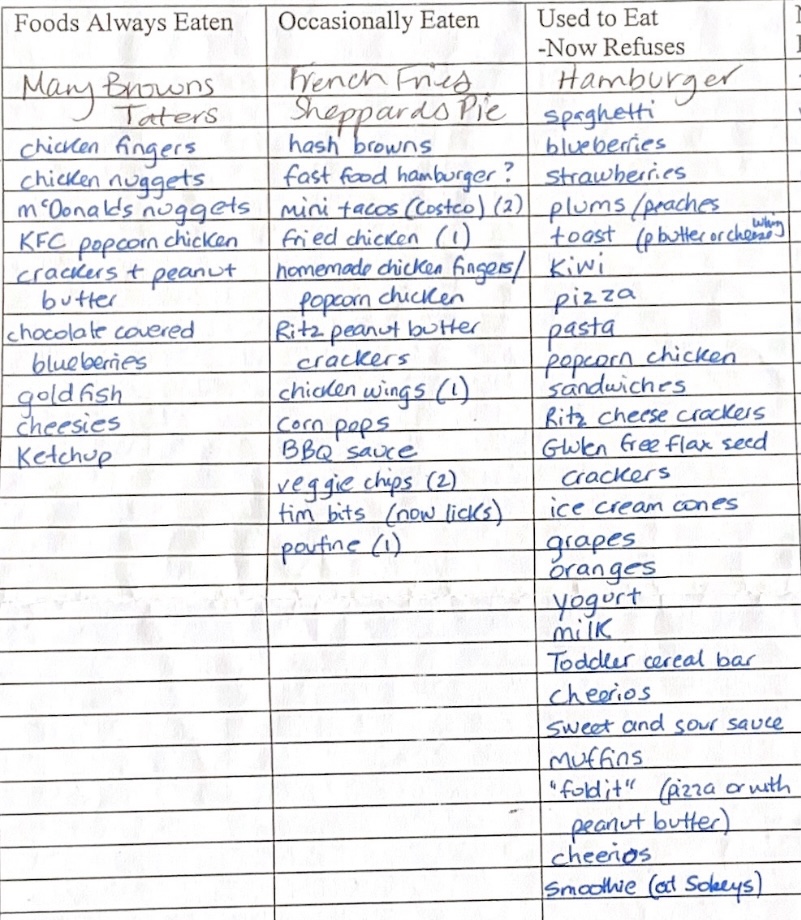
Recently I was cleaning up my many ‘Tyson’ binders (other parents of autistic children will know what I am talking about) and I found a sheet of paper with a list of all the foods Tyson eats, occasionally eats and now refuses to eat.

It was a trip down memory lane.

That list has gotten smaller.

I remember when he was about 8-9 months and my aunt was watching him for the day, she commented on how much he loved food. You couldn’t walk past the fridge and he was reaching out his arms for food.

I’m not sure where things went so wrong.

It was not like one day he was eating everything and the next day he was getting only foods from his ‘beige plate’ list.

It was gradually.

So gradual in fact, I didn’t see it happening in front of me.

I do remember the first time he stopped eating spaghetti.

He was suffering from acid reflux at the time and we thought the tomato sauce was just too much for his stomach and that’s why he stopped eating it.

I also remember the last time he had an ice cream cone. He took one lick and then laid the ice cream of the table. We just figured he was full.

Loving his ice cream cone (July 2015).

Slowly over time, he lost more and more foods.

Food issues is another one of those things that often coexists with autism.

At the time, I did not stress when he stopped eating a food he used to eat. I just assumed over time he would eat it again.

He did not.

By the time we realized this, he had so little foods left.

Tyson is actually considered a problem feeder, one step above picky eater.

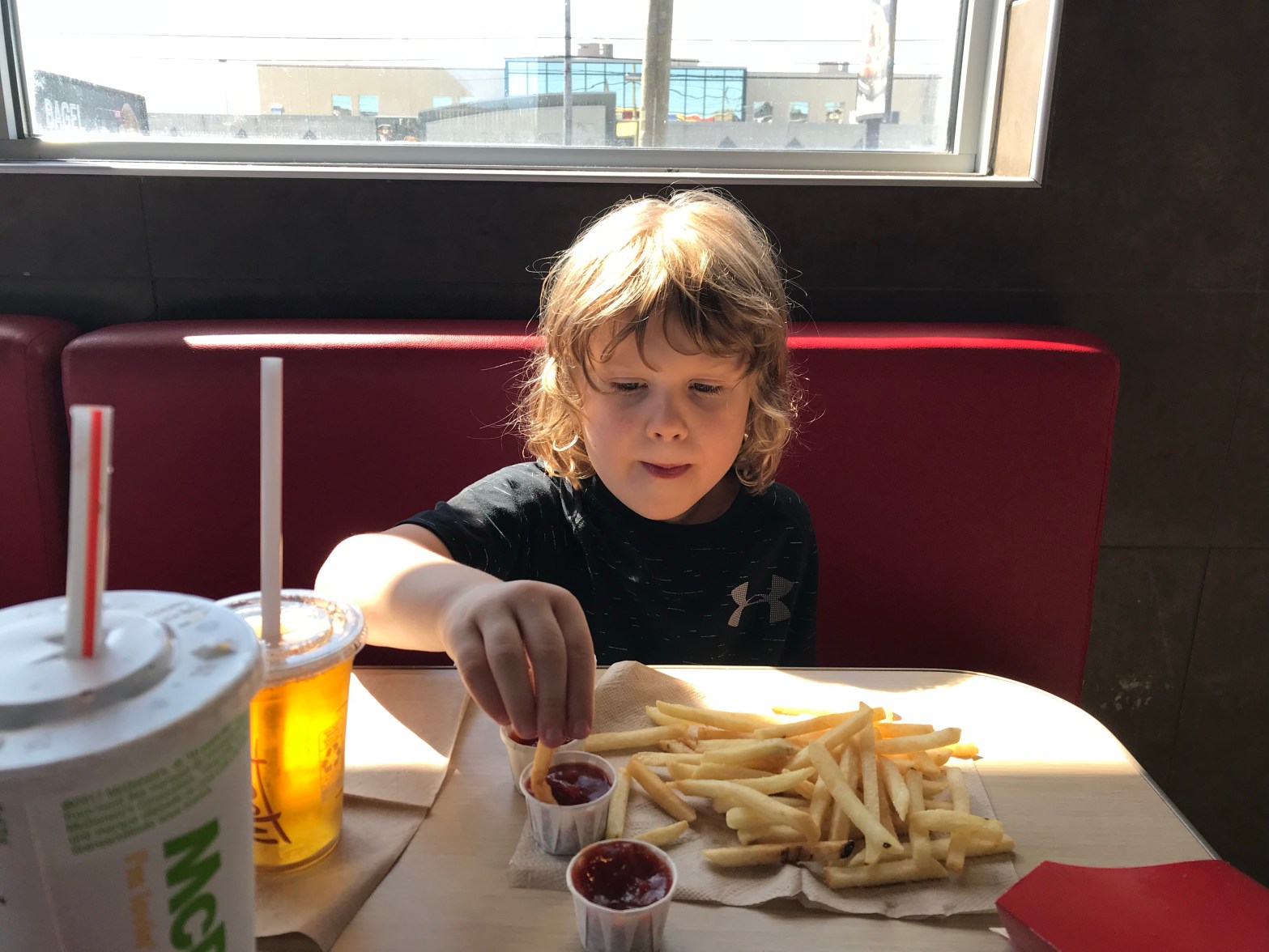
He only has about 10 foods that he will eat. We count McDonald’s fries and restaurant style fries as two different types of foods. When the list is this limited, you count everything.

But it’s not just about the total number of foods he will eat but also the type of food he is eating.

The beige plate.

His food consists of items mostly beige in color, plain in texture and taste.

No fruits.

No vegetables.

No meats, besides processed chicken.

It’s also about brands and packaging.

Tyson will only eat Jane’s chicken nuggets.

He will only eat the original cheddar goldfish and not any of the other flavours. If you tear the bag slightly when opening, he won’t eat them.

We have lost some foods because the packaging changed (like the snack size mini chocolate chip cookies).

We have participated in a food program at the Janeway and I have attended several Janeway and private hosted food seminars to try and help Tyson.

And yet, here we are.

Less than 10 foods.

Going out to eat is extremely hard.

We have one child who only eats 10 foods and another child that has Celiac (inability to consume wheat).

I’ve just about given up eating anywhere that is not McDonalds.

I believe many of Tyson’s food struggles are due to his sensory issues.

Eating is a total sensory experience.

We touch it.

We smell it.

We see it.

Then, we taste it.

It’s what the rest of us love about food.

When we see a picture perfect piece of chocolate cake or smell homemade bread baking, it makes us want to eat it.

Likewise, if we smell the carton of milk that has gone sour, we don’t drink it.

We are already experiencing the food before it touches our lips.

But when you are hypersensitive to touch, smell, and/or taste, it can make eating a challenge.

I know some of you reading this are probably thinking, ‘he will eat when he is hungry’.

I think I have heard that once or twice (more like a million times).

But he will not eat it.

He truly will not eat any food that is not on the list.

It’s not because the child is difficult, it’s because the child is having a difficult time!

So … what do we do?

Resign to a lifetime of chicken nuggets.

No, we keep trying.

Before the pandemic, we were working on food exposure with Tyson.

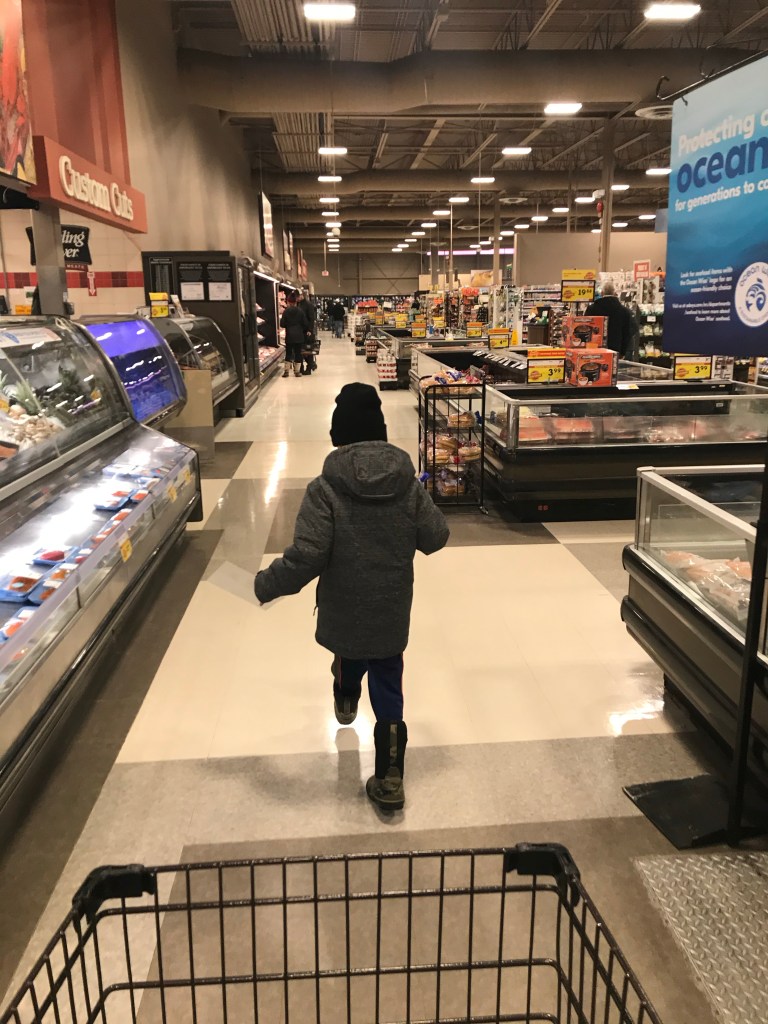
So we would go to the grocery store once a week and have a list of three items. Tyson would have to find the food, pick it up and put it in the cart.

Trip to the grocery store.

There was no pressure to eat the food, just get him familiar with different foods – how they felt and smelled.

We also were learning about the food. So I wrote short social stories about apples for example – what they look and taste like, where they grow, different ways apples are used as food.

Apples are funny foods in that they look different on the inside compared to the outside, come in a variety of colours and the same type of apple may taste different from time to time. Probably not the best food to start with.

We also started getting him to help prep simple foods like making a pizza or smoothie.

Getting Tyson to touch foods, especially ‘wet’ foods, was a challenge at first. Often he was a bystander, instead of an active participant.

We didn’t make any progress but we also haven’t done any of these activities since COVID.

So we will try again.

Off to find the next item on the list.

The reason I decided to share our food struggles was in a hope to foster some understanding and compassion to these kiddos who struggle with food.

We never set out with the intent of Tyson only eating chicken nuggets, it’s just the place we are right now.

So if you happen to be in the presence of a kiddo like Tyson, who struggles with new foods, please be kind.

We are trying.

He is trying.

He just needs a lot of practice and a lot of patience from those around him.

Perspective

After posting my last blog (My Love Hate Relationship with Summer) I found myself lying in bed one night wondering what other people thought when they read it.

Do they think our life sucks?

Do they pity us and our struggles?

Please don’t.

I am actually a very content person.

I love my two beautiful kids. I love my husband. I love my job. I love my amazing, supportive family and friends.

Do I love all aspects of my life all the time? No. But who does?

Do I love the struggles we face every single day as an autism family? No. But our struggles has made us the family we are today and we are a pretty awesome family.

I am a ‘glass-half-full’ type of person.

I think part of that mind set comes from finding ways to cope with stressors and everyday life.

As a follow up to my last post, I would like to tell you about the ways I have learned to cope with summer.

I think we as moms feel guilty about so many things. When Tyson was little, I would feel enormous guilt when we didn’t do everything as a family.

Now, how silly is that?

My logic didn’t really make sense. I’m sure typical families don’t do everything together.

But I had it in my head, that families do things together and autism wasn’t going to stop us.

In the beginning we would all go out together, which would often end badly and then I would feel miserable for taking Tyson in the first place. He really couldn’t handle it.

Then I started to refuse to go if we all couldn’t go.

Also, not a good choice. I was missing out and was a tad resentful for it.

The best advice someone gave me was to let go of the guilt and see it differently.

Instead of having an all or none approach, I should look at each outing as unique and make a decision on what worked for each family member.

At first it was hard.

Deciding to leave Tyson at home with a babysitter (aka Auntie) and going without him, was tough.

But realistically, he could not sit in a restaurant for two hours patiently for example. And so, if I wanted to go, I needed to leave him home.

Now, don’t get me wrong – I don’t leave him at home very often. Only the times I know it would not interest him, be too much for him or there would be a safety concern.

Me and Lincoln at Cape St. Mary’s

In the beginning it was hard not to feel guilty, especially when others asked why he wasn’t with us.

But as time went on, I became more confident in my decision.

For any other special needs families that are reading this, I would like to tell you that this doesn’t mean I gave up trying.

Just because your child can’t handle it now, doesn’t mean with time and practice, that can’t change. Also good advice from a friend.

Does this mean I am going to take Tyson to Bowring Park now that the pool is open, and there is a lineup to access the pool, and being in the lineup does not guarantee you entry? Not in this lifetime (G n’ R shout out).

I will avoid Bowring Park at all costs now until the pool closes. However, we may try Topsail Beach this summer during a weekday morning. (Maybe 😉)

Never give up trying new adventures, but equally important, know your limits.

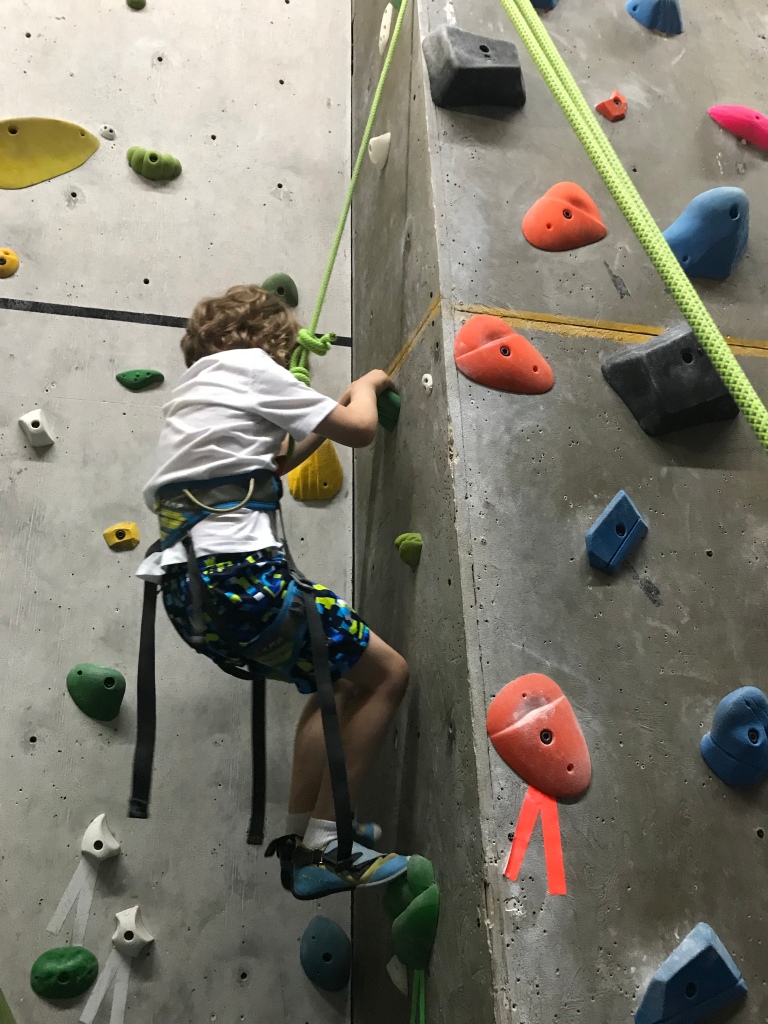
Tyson rock climbing at Walnuts

My second tip for surviving summer, which really applies to any time of the year, is to find something you like to do and do it. In other words, make time for yourself.

Self care.

I think many of us, as woman, lose apart of ourselves when we become moms.

And having a child with autism (or any exceptionality) intensifies this. I was consumed with appointments, therapies, activities and goals that there just wasn’t time to do the things I liked to do anymore.

Well, last year during the pandemic I started to once again do the things I enjoy.

I started reading again, for fun.

Not articles on autism, not scientific journals about autism, not parent blogs about autism.

Reading for pure fun!

Imagine … sitting down and relaxing, reading a book when you have a list of things you are suppose to be doing like laundry, or cleaning or cooking. Well …. maybe not the cooking part 😉.

This was also hard for me. I think more so because it was a solitary activity.

As you know, I also started a blog. I have always loved to write and now I get to share our story with all of you, which is very therapeutic for me.

And just this past October, I joined a Learn to Run program.

Best decision ever – hands down!!

To be honest, I always wanted to learn to run.

Runners seem so content and happy. (Not the ones like me, that look like they are struggling to breathe but those seasoned runners, who make it look effortless.)

However, that is not the reason I decided to join.

Myself, Tyson and Meagan (my sister) were on a walk and Tyson took off running and I couldn’t catch him. Luckily, it was on a trail, and was in no immediate danger but it got me thinking that this situation needed to change.

I needed to get in better shape in order to be able to catch him if he ran in an unsafe environment.

What I didn’t realize was that running would give me so much enjoyment and contentment.

When I run, I don’t have a single thought in my head.

It’s my me time!

And after a run, I feel a wonderful sense of personal accomplishment. After only 3 months in the program, I could run 12 km. And for someone who has never worked out since having children, it feels pretty great to do able to do this.

Disclaimer – I’m not aiming to be a track star and truth be told, I’m pretty slow. Actually, extremely slow.

I’ll probably never to be able to keep up with Tyson, but running has a new purpose now – one that’s all my own.

Dec 2020 – PB 12 km

My Love Hate Relationship with Summer

The warmth of the hot sun.

The smell of lilac and fresh cut grass.

Blue raspberry soft serve.

The sound of the ocean and the squeals of children trying to outrun the waves.

S’mores on Topsail Beach.

Walks after supper.

Vacation.

What’s not to love about summer?

It is the season I hate to love.

It is by far the most challenging season for me being an autism mom.

The routine of school is over. That, in itself, brings new challenges.

Tyson strives on routine.

But it’s more than just a change in routine that makes summer hard.

Summer is the time when social media is filled with all you lovely people making beautiful memories with your families.

And I think ever summer I grief a little for what summer should be for us. I want the hikes in the woods, the fires on Topsail Beach, the outdoor movies at Bowring Park, the fancy ice creams, followed by the sticky hands and faces.

I want it all.

I want to be so busy, that when I get home, I drop with exhaustion.

But we can’t do that. We have to plan our days carefully, making sure not to overwhelm Tyson.

We also don’t attend events that are busy because we know it will be too people-ly for him.

Going to Bowring Park and realizing they have a festival going on with a bouncy castle is enough to put me in panic mode because I know it’s not going to end well.

I guess this is why last summer was so great. We didn’t go anywhere because of the pandemic. There were no feelings of missing out because everyone was in the same situation as us.

The last couple of weeks have been a reminder of how things change for us in summer.

We went to Manuals River for a walk and kids were swimming. Tyson wanted to swim too. I am not cool with Tyson swimming at Manuals River. Note to self – avoid Manuals River until it’s too cold to swim.

We went to Chapters and Tyson got upset that I wouldn’t buy two copies of the same book that he already had at home. The lineup was huge. He dropped to the floor and kicked and cried while everyone stared at us. It was not a good day. Note to self – avoid Chapters during busy times.

We went to Lester’s Farms and I am not sure what happened. Tyson got upset and we had to leave. Note to self – don’t ever go to Lester’s Farms on a Sunday!!!

We went to Neil’s Pond for a walk and a certain person, that shall remain nameless, let Tyson put his feet in the water, with his sneakers on. The next walk around Neil’s Pond, he just ran right into the water with his sneakers on. If Tyson is allowed to do it once, he doesn’t get the idea that the may not be able to do it the next time. Tyson was mad for the rest of the walk that his sneakers were wet but would not turn around and go home. Note to self – find new walking area with no bodies of water. And don’t get me started about Topsail Beach – let’s just say I don’t go without wearing runners.

And then, there are all the other places we normally frequent, that are just more crowded in summer when the kids are out of school – Get Air, Axtion, and the parks that have splash pads. All are off the list on the weekends, or when the weather is super nice, or for the indoor places, when the weather is crappy.

It’s a fine balance between attempting to go somewhere and knowing when to stay home.

Summer is hard.

And it’s hard when you have an older child that wants to do all these things.

So, we divide and conquer.

One of us will often stay home with Tyson or we take two vehicles, so if Tyson gets to his limit, one of us can take him home.

It’s all about finding the balance.

And now Tyson is running again.

For those of you that are not familiar with this idea, I am talking about eloping. Elopement is a term used to describe when an individual leaves a specific area without permission. It is very common in autistic children.

I feel the definition does not give a good description of the actual event though. Picture this – at the moment you least expect it, your child takes off running, irregardless of the environment they are in, as fast as their little legs can run, which in Tyson’s case is very, very fast, with the adult frankly chasing behind. Picture busy roads, the exit door at Chapters, the school parking lot.

It can be terrifying.

In the last month, Tyson has run away from me probably 5 or more times. Sometimes the situation has been under control (like when on a trail), other times it has scared the living s$$t out of me.

Eloping makes you want to never leave the house again.

As all of you look forward to getting back to normal living, please remember us families, that are still living life in our backyards, where it is safe.

And if we happen to be brave enough to leave the safety of our nest and things are not going well for us, please be kind. We are just trying to soak up some summer too!

Salmonier Nature Park, our favourite place to visit.

From PECS to Proloque2Go and Everything in Between (Part 2)

Before talking about where we are now in terms of communication, I need to take a step back and talk about how we got there.

In my last blog, I talked about Tyson using PECS (Picture Exchange Communication System) as his primary method for communication as a toddler. In addition, we supplemented his language development with a lot of visual aids and some very basic sign language.

From toddler to preschool age, we focussed on teaching Tyson the sign for more, open, all done and bye. Signs that are easy to do and easy for most people to understand.

Tyson still uses the sign for more to this day – more chicken nuggets, more pushes on the swing, more electronic time.

MORE

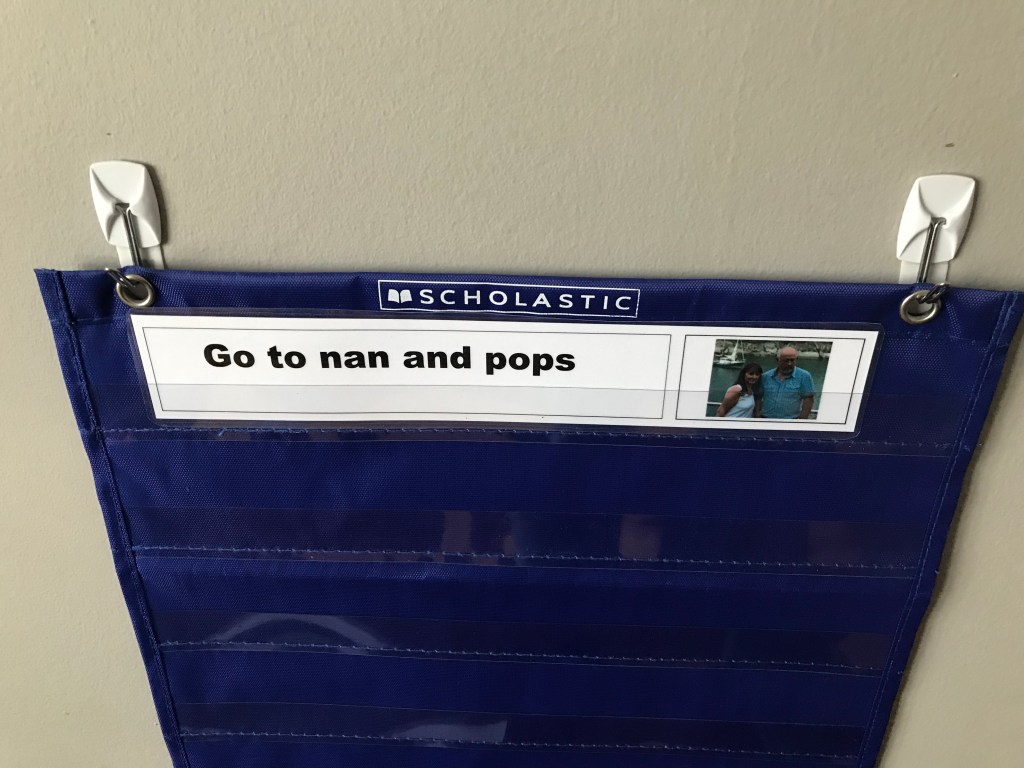
In addition to this basic sign language, we filled our house with all sorts of visual aids. We had a First/Then board, a daily visual schedule and pictures of the toilet (for potty training) everywhere. Common items in our house like the fridge, the bed, the door, and the TV were labelled with cue cards. As well, each drawer in Tyson’s bureau had the word and a picture of the clothing it contained.

An example of Tyson’s Visual Schedule

As Tyson’s interest in letters grew, I used a Bristol board to create a giant alphabet, paired with a picture to represent each letter. Sometimes we would play a “game” where I would give him a picture, sound out the word and he would have to match it to the correct letter.

I consider us very lucky that Tyson developed such a love for letters (and numbers).

We had thought about switching to an electronic app when Tyson was about four. We tried a free communication app called Sounding Board but after finding the iPad in the sink filled with suds and water, we were hesitant.

We could not replace iPads on a weekly basis.

Although PECS had given Tyson the ability to communicate, it only gave him a voice for what was currently in his binder.

A voice for what I thought he wanted.

PECS was also labour intensive.

Prep work for PECS

Take a picture of the item or use a google image.

Size it to the right dimensions for the binder (cause lets be honest, I am a tad bit anal).

Cut it out.

Laminate it.

Cut it out again (after laminating).

Put Velcro on it.

Repeat.

Repeat.

Repeat.

For 100s of little pictures.

And those little pictures got lost all the time. Every time I swept under the couch I would find one. I was constantly inspecting Tyson’s binder to ensure that all the pictures were there.

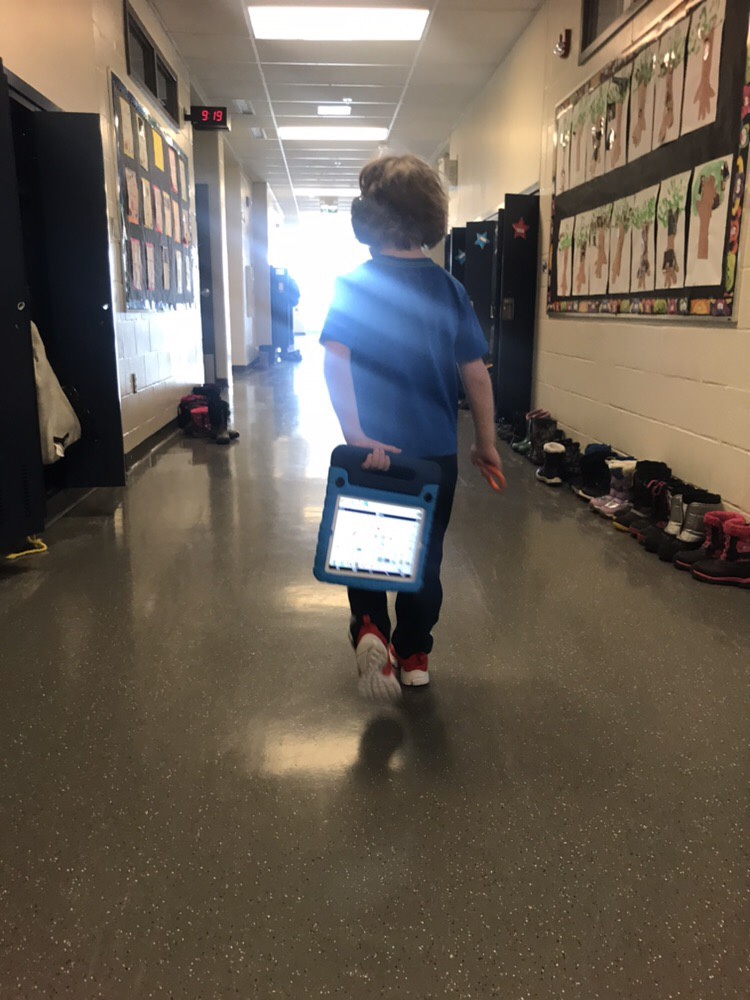
Before Tyson started school, I felt the need to give the electronic app option another try. This time we decided on Proloque2Go and have never looked back.

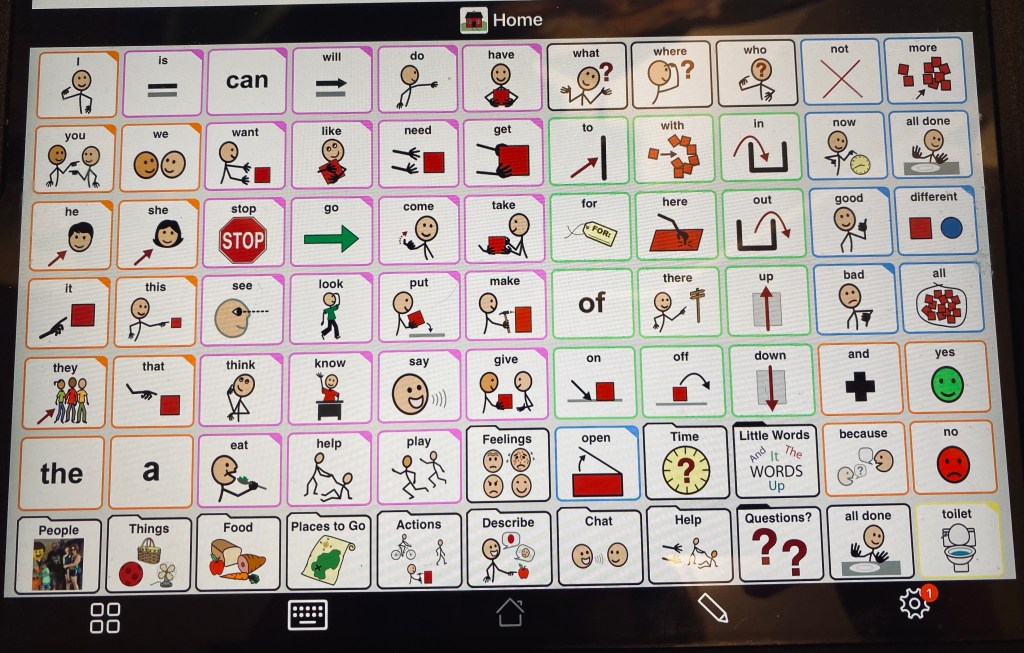
Proloque2Go is a symbol based app that has hundreds of preprogramed words, along with the ability to add custom icons and folders. The main screen for Proloque2Go focusses on core words (verbs, adjectives and pronouns) which is very different from what we had used in PECS which focussed on fringe words (nouns).

Home Screen for Tyson’s Proloquo2go

There are generic folders generated by Proloque2Go for categories such as food, colors, numbers, and places which I can customize specific for Tyson.

I also created custom folders for such things as family members, TV shows, school, homework and home items.

As Tyson became more proficient with Proloque2Go, he learned how to add his own icons. He would take a picture of the cover of his new books and type the book title for the label.

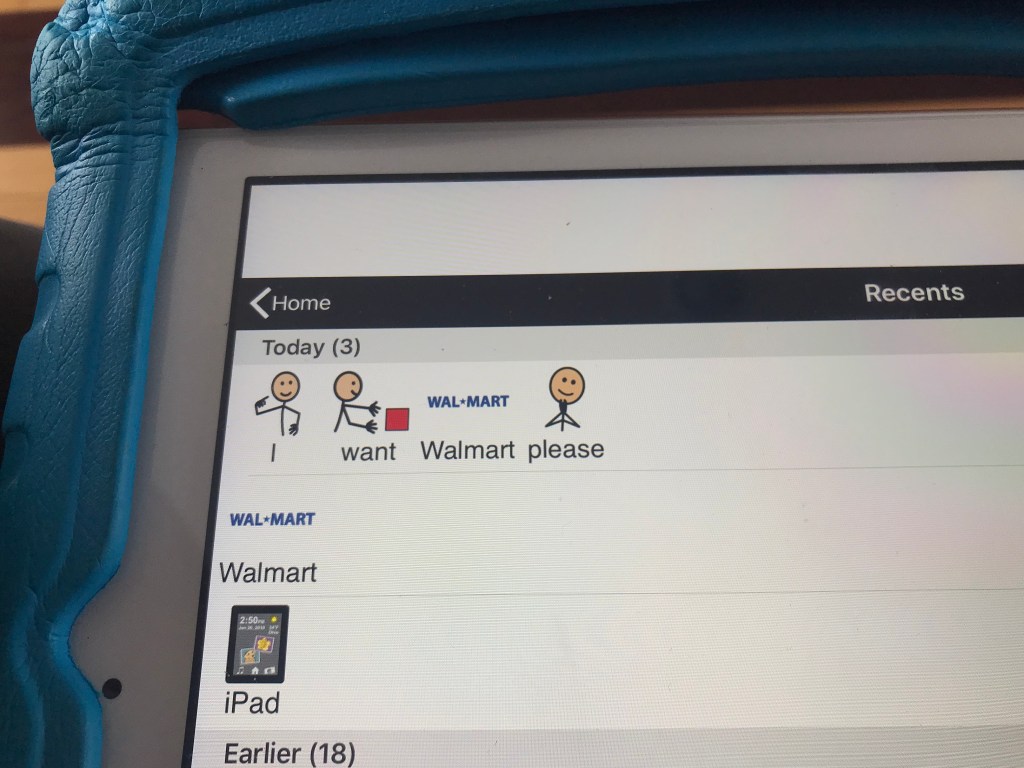
“I want Walmart please”

Proloque2Go also has a qwerty and alphabetize keyboard to allow the user to type their own words, independent of symbols.

Tyson will also use the search feature if he doesn’t know how to spell the word but knows the beginning letter. He will often add a vowel after the letter to help him find what he is searching for (ie ba, be, bi, …).

His brain is just amazing.  

Proloque2Go has given Tyson a voice.

A voice that is not limited to what I think he wants to say.

I think when I describe Tyson’s ability to use Proloque2Go to most people, it gives them a false sense of where he is, communication wise.

We still have a long way to go.

He is able to repeat back what we say using his iPad but independent speech, outside his own agenda (DVDs he wants, places he wants to go, snacks), is really rare.

On Friday, when asked, he told me “watch movie school” and spelled it all independently, but he couldn’t tell me the name of the movie.

Now I’m sure he knows which movie they watched but yet, he struggled to answer the question.

Questions are hard.

Communication is hard for kiddos with autism.

Last week I was helping Lincoln with homework and Tyson was angry that electronic time was over. He used his iPad to tell me “cry”. Every 10 seconds or so, we would hear Josh (the voice on Proloquo2Go that Tyson uses) say “cry”. But Tyson wasn’t actually crying, he just wanted us to know he was upset. When me and Lincoln would look into the living room, he would pop his head back down so we couldn’t see that he actually wasn’t crying.

It was cute, sweet and a little sad all wrapped up into one.

Sometimes I think we are not doing enough to help him develop his communication. And other times I think I have the poor child drove with my expectations.

But I do not worry about it …. I know he will get there.

I can see us in the future having a grand chat through text.

And it will be great.

And I will look back on this time and marvel at how far he has come.

From PECS to Proloque2Go and Everything in Between (Part 1)

The other day I opened a file on my computer called “pics” and it made me smile, laugh, sigh and pause all at the same time.

Pause to reflect on where we were and where we are now.  

I am guessing most of you have folders on your computers with the same title, but I am thinking my folder is unique. 

Maybe unique is not the right word – maybe different is more fitting. 

It does not contain pictures of the kids, or family gatherings. Nor does it contain scenic pictures of wonderful trips.

The very first picture I opened from this folder was of a tub of Eversweet butter, followed by chocolate covered blueberries and toddler cereal bars.  

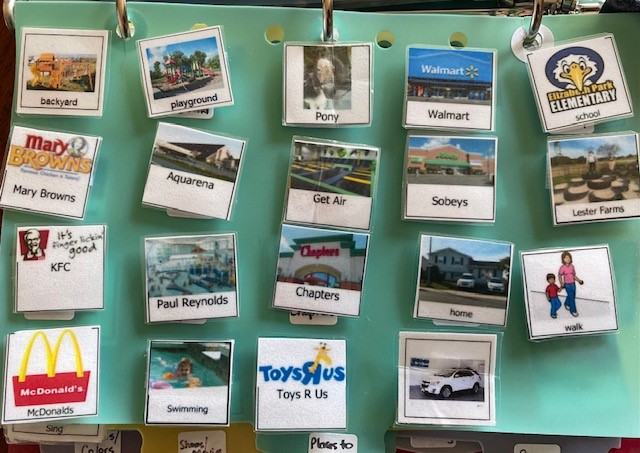
There was lots of food pictures but also pictures of logos and random generic places like the grocery store and the playground. This was the folder I used to store all the images we needed for Tyson’s PECS binder.

PECS stands for Picture Exchange Communication System. It was the very first formal system of communication we used with Tyson. 

For those of you that are unfamiliar with PECS, and let’s be honest, this would be the majority of people, PECS is a type of alternative/augmentative communication (AAC) system that is low tech. It is often used by individuals who have little or no verbal skills. It can also be used by individuals who are verbal but sometimes have difficulty expressing themselves verbally.

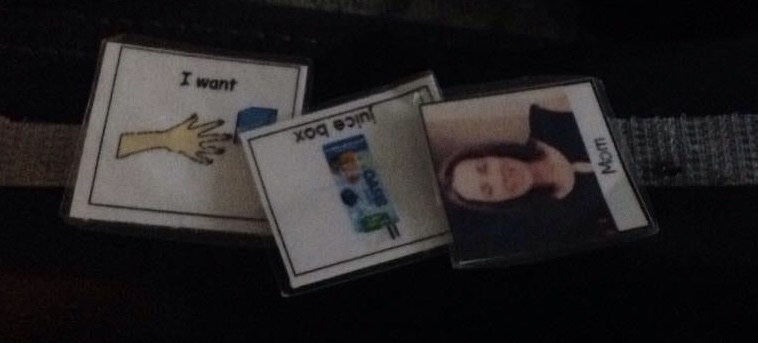
This system of communication is basically as the name suggests, whereby the individual uses a picture to communicate what they want in exchange for the item. For example, Tyson would give me a picture of goldfish crackers, I would then take the picture and in exchange, I would give him the goldfish.

Life altering stuff!!! 

Before PECS, it was very hard for us to determine what Tyson wanted in the run of a day.  

I have heard many people over the years say it’s hard when you have a pet and you know something is wrong but they can’t tell you what it is. Well, that’s exactly what it was like, except it was our child.

Our beautiful little toddler had no way to communicate. He also did not have the skills at the time to point, so unless it was within reach and he could get it himself, it was a guessing game as to what he wanted.

He could go to fridge or go to the cupboard if he was hungry and then we could present items he might want. So I would take two items out of cupboard and ask which one he wanted. He would push away the item he didn’t want but never touched the item he wanted. (It took us a little while to figure that one out).

He could not tell us if he wanted to watch a certain TV show or if wanted to go the park. He could not tell us if he had a belly ache or if he was scared or tired.

The moment that stands out the most is the day when he was just sitting on the couch crying. He had these big tears rolling down his cheeks and he was just sobbing. We had no idea what was wrong.

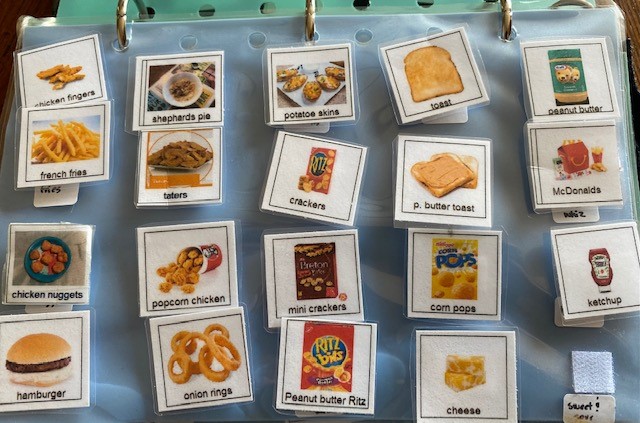
But things started to change when we introduced PECS. We started with just a few pictures of highly motivating items and added more and more pictures as he progressed. Eventually we had a PECS binder.

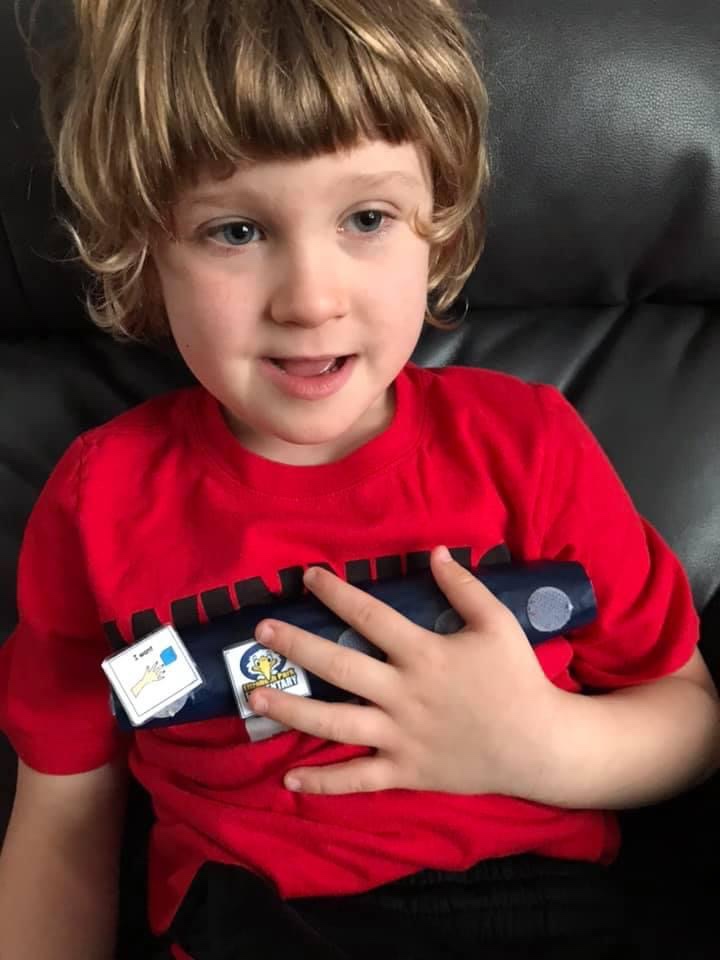
He had a page for food, drinks, places to go, toys, and TV shows. We started to use a sentence strip and Tyson’s requests now turned into “I want goldfish please”. It was great.

It was progress. And as an added bonus, Tyson’s frustration level went down. He could tell us, to a certain degree, what he wanted. 

As time went on, we added more pages. There was pages for family members, daycare, songs, emotions, colours, numbers and right at the back of the binder, the icons for “yes” and “no”.

PECS is by no means the perfect system. Tyson could still only ask for something that we thought he wanted. So if the picture was not there, he could not ask for it. We have since moved on to an electronic AAC system called Proloquo2Go, however PECS was a great starting point. And we started using PECS about 6 months after Tyson was diagnosed and continued to use it until before he started school.  

I just wanted to add, for any parents that are reading this and their child is nonverbal, please don’t be scared to use AAC, thinking it will inhibit speech. If the speech is going to come, it will come. A child will pick the path of least resistance and verbally saying a word is always easier than going to a binder, picking a picture and bringing it to an adult.

Providing a nonverbal child with the means to communicate is giving them a voice. And all children need to be heard.

Disclaimer – If you are planning on implementing PECS with your child, please consult a speech language pathologist (SLP) as they are trained in this field and can provide the guidance and tools needed.

Stay tuned for Part 2 

ASD and Tyson

Bright, blue eyes. Tangly, curly hair. Handsome face. Energetic. Stubborn. Determined. Strong.

Autism Spectrum Disorder (ASD). Attention Deficit Hyperactivity Disorder (ADHD). Apraxia of speech. Sensory Processing Disorder.

Two very different lists. It is the combination of the two that makes Tyson who he is.

The beginning years focused heavily on the second list. The list that was associated with all the things Tyson could not do. The list that seems to grow as time goes on.

When a child is investigated for ASD there are three broad areas that are observed: 1) communication, 2) repetitive, restricted behaviours and 3) social interaction.

When I think about toddler Tyson and our beautiful boy now, all of these struggles are still a very big part of his life, they just present a little differently.

Communication

When Tyson was 8 1/2 months he said his first word, dad of course, which was followed by bath and bye. I don’t recall thinking it was odd that he did not say mom.

What I did not know at the time was that Tyson would regress and lose those beginning words. I regret not getting a video of that sweet little voice saying dad. I guess it goes along with the territory of being the second child.

Before I became a parent to an autistic child, I never really thought about communication. As parents, we think in terms of words. First words, new words, the number of words, curse words. I remember recording in Lincoln’s baby book that he had 50 words at 18 months. It’s all about the words.

However, there are actually lots of ways to communicate besides speech – facial expressions, body language, gestures. Many children with autism often have difficulties with all these types of communication.

Toddler Tyson was not using any forms of communication – no words, no sounds, no pointing, no gesturing, no eye contact. Nor did he respond when you said his name. It is really hard to remember how things were back then. No shared smiles, no silly looks, no pointing to show you something. Basically no communication.

Although Tyson’s verbal communication has seen very little fluctuation over the years, we are now at our all time low in terms of the words and sounds Tyson can say, which is hard to believe after 6 ½ years of speech therapy. Tyson can say dad, baba (that’s me, the mama), pop, bye and ‘es’ for yes. It’s been hard to see him constantly regress in verbal speech. At one point he had about 20 words or word approximations. That list is still pinned to our cork board.

But if he said it before, he can say it again. We will get there.

I am truly grateful for how far Tyson has come in all the other forms of communication. He currently uses a communication app called Proloquo to speak for him. His eye contact is improving. He points and drags us to show us what he wants. He stomps his foot or slaps his leg for no. His typing and spelling skills are lit (as Lincoln would say). And his facial expressions are priceless. Lets just say if looks could kill, me and Mark would be in trouble.

And he shares with us – he shares his happy, his anger, his sad – in his own special way. And how can we not be grateful for that!

Repetitive, Restricted Behaviours

In terms of repetitive, restricted behaviours I did not see these signs as easily when Tyson was little. He did not line up toys, or look at things out of the corner of his eye. He did not rock back and forth. However, he would often hop along the floor on his hands and knees. He would spin in a circle over and over again without getting dizzy. He needed to have doors closed at all times or he would become very upset. He placed his juice in the exact same spot on the table every day. And when I say exactly the same spot, I don’t mean the general area, I mean the exact same spot.

Present day, Tyson’s repetitive, restricted behaviours are a little more subtle in many daily settings. He may do the same action over and over or follow the same path (up one side of the bed, tumble, down the other side). When excited, he may jump up and down. When he is really upset or dysregulated, he will pace.

I think the most noticeable repetitive, restricted behaviour involves Tyson’s electronic usage. He prefers to watch the same clip of a show (~ 15-20 seconds) over and over again. It’s usually a funny part or a very specific sound or phrase. Well, what he actually prefers is to watch TV, his iPad, his DVD player and listen to music all at the same time. It’s amazing to see how he can control all devices simultaneously and keep each one playing the exact same clip. Amazing … and well a tad annoying.

His restrictive behaviours have trickled over into food preferences but that is a topic for another day.

Social Interaction

In terms of social interaction, toddler Tyson showed very little interest in people. He did not acknowledge people when they entered a room or have a desire to interact with adults or children. I do not remember baby Tyson having the same lack of engagement. He would watch people, smile, laugh and do all the things that neurotypical babies do.

It was like a switch was turned off when he turned one. It is actually fascinating to think about how the brain works, until you stop and remember it’s your child.

Tyson still has major struggles with social interaction. Although he now will notice when a person comes into the house, he does not necessary seek them out. Unlike most children his age, he does not seem to want to play with other kids. He is working on more or less tolerating other children next to him.

Tyson’s interaction with adults is mostly to get needs and desires met. He will tell us if he wants food or wants to go outside. He will show us DVDs and books with the premise that we will take him to the store to get them or order from Amazon.

I think no matter how much time passes, Tyson will always need support in these areas. Right now, our goal is to take it day by day, helping him become the most independent version of himself that he can be.

Finding the Joy

I remember one day sitting on the couch watching Tyson on his indoor swing – he was so happy. He was smiling, laughing – enjoying the world only he was in.  

As I watched him, I thought, how is it that I can be so sad, yet he is so happy? How can I not see this beautiful child here in front of me and just enjoy this moment?

It can be so hard to feel the joy when your heart is filled with sadness and your mind is overwhelmed.  

And my mind was completely overwhelmed. After Tyson was diagnosed, there was so many appointments to attend. Tyson started ABA five days per week and was also seeing a speech language pathologist and an occupational therapist. When I wasn’t running from one appointment to the next, I was thinking about all the things we were suppose to be working on – speech goals, OT goals, ABA goals and the list went on and on.

Right at that moment Tyson was swinging and laughing. He was happy. Why not be happy with him? If we couldn’t share many typical parent child moments, then why not share a feeling?

I think that day was the turning point for me. I vowed that no matter where this autism journey led us as a family, I needed to be present. Present in the moment.
I was definitely present for the sad moments, why not be present for the joyful ones too?

But as the day went on, that mindset would fade and I was back to remembering that list of goals in my head, along with the worries that went along with it. It was then I decided to start “Tyson’s Book of Awesomeness”. I went out and bought a pretty leather-bound book and begin to write down all the little things that Tyson did today that he could not do the day before.
Nothing profound for the typical parent – putting on socks, pointing to the juicebox he wanted, returning a glance when I said his name. Everything and anything made the list.

My very first entry said, “moved fingers for goodbye when leaving the Little Gym”. I can remember this day and how excited and emotional I was because he had waved goodbye as we left. I was hoping that none of the other parents noticed the tears welling up in my eyes.

Tyson had been going to the Little Gym for months and trying to get him to do any of the tasks was challenging to say the least. But it wasn’t just the skill orientated tasks like tumbles or jumps, it was all of it – sitting in the circle, lining up, popping those damn little bubbles, even getting a sticker at the end. It was all hard.

Tyson had never waved goodbye before and although it was not really a wave, more a motion of his fingers, it counted. Progress.

As the weeks and months went on, I continued to write in Tyson’s little book. This book captured all the little things – learning to clap hands, pointing, saying a new word, popping those little bubbles. When I was having a hard day, I would open the book and reread all the entries. It really was uplifting.

Some days it can be hard to see the progress. When your child suffers from significant delays in so many areas, your life can just revolve around lists of things to work on. And the problem is when one goal is achieved, it is just replaced by a new one. It is a never ending cycle.

However, if you can take a moment to just be present, perhaps you can start to bring back the joy in your life, one little moment at a time, just like I did.

The Beginning

If asked the question, what is the most memorable event in your life, what would your answer be? Just take a moment and really think about it.

I am guessing that most people would say their wedding day, the birth of their children or perhaps the death of a loved one. For me, the day that defined my life and the life of our family was October 29, 2014.

October 29, 2014. It was the day our family changed forever. I will never forget sitting in the doctor’s office after the ADOS assessment and she said Tyson has autism spectrum disorder (ASD).

It felt like all the air was just sucked out of the room. I immediately began to cry and didn’t hear much of what was said after that, except one thing stood out for me – if you have met one child with autism, you have met one child with autism. I’m sure other parents on a similar journey will probably remember these same words.

It is suppose to be comforting words, meaning that all children with autism are unique and that you can’t predict their future.

For me, these were not comforting words. In fact, it was the opposite. To me, it meant this professional here in front of me could not tell me what the future held. It meant she could not tell me if Tyson would ever speak.

Despite all the signs and months of questions leading up to the diagnosis, I was still in shock that Tyson had autism. I had gone to the family doctor with concerns and the public health nurse with a list of all the milestones that Tyson should be meeting but was not, yet after waiting months to see a child developmental pediatrician, I was still in denial.

For those that do not know, ADOS stands for Autism Diagnostic Observatory Schedule. We were invited to this little room, accompanied by a speech language pathologist (SLP) and a nurse, while the physician and the intern were behind a one way window.

Both the SLP and the nurse tried to engage Tyson in activities – play with toys, blow bubbles, join them for a snack. The job of the parent is to just sit there quietly and not provide any assistance to the child. With each task that Tyson did not engage in, the answer to our question was clear, yet I did not want to hear the answer.

In my mind, I was willing him to put the candles on the fake cake, and willing him to pretend blow them out … it did not happen. Each time they said his name or blew a bubble and waited for a response, my heart sank a little deeper. I tried to blame his lack of participation on his head cold but as the doctor said, he had all the signs.

For some parents, a diagnosis brings relief. For many, the journey from acknowledging a problem and actually getting a diagnosis can be up to 2 years. I’m not sure if that contributes to the feelings of relief or if those parents were just in a different mind frame than I was.

For months after Tyson’s diagnosis I would cry every day coming home in the car from work. I had just started a new job a few months prior and so I could keep myself preoccupied at work by completely focusing on learning all the new skills I needed to know. At home, things were busy enough with two small children. But when I was alone with my thoughts, autism was all I thought about. It had taken on its own life form. I could see the word autism in big bold capital red letters in my mind. It was the first thing I thought about each morning and the last thing I thought about each night.

I remember one morning, probably 3-4 months after Tyson was diagnosed, I got in the shower and as I was washing my hair the word AUTISM popped right into my head. I thought, wow, I am doing good today – I made it to the shower without thinking about autism.

Today, that place seems so far away. There are still moments of sadness and grief but they are far and few between. The real turning point for me was when I started to focus on Tyson, seeing him for the amazing person he is. He works so hard each day just to do things everyone else takes for granted. And he truly is awesome.

I am hoping this blog will be a way for me to share our experiences with the world, one story at a time.